The 1950s
The post-Stalinist era after the dictator’s death in 1953 began with a period of ‘thaw’: unlike in previous decades, artists were given a little more freedom to engage in creative pursuits, embody new ideas and explore their roots. Moreover, a cohort of repressed Ukrainian artists was rehabilitated, and the works of Dmytro Bortnianskyi, Maksym Berezovskyi, and Artemii Vedel were republished. At the same time, the Soviet propaganda machine was gaining momentum, preparing alarge-scale and influential campaign to mark the 300th anniversary of the Pereiaslav Agreement — the event when Hetman Bohdan Khmelnytskyi was compelled to enter into an alliance with the tsardom of muscovy. In 1954, the USSR’s leading newspaper Pravda published ‘Theses of the Central Committee of the Communist Party of the Soviet Union on the 300th anniversary of the reunification of Ukraine with Russia’. This text became the driving force behind the spread of a falsified version of history and one of the fundamental aspects of the current hostile propaganda claiming that Ukrainians and russians are fraternal peoples.
The thaw period is distinguished by its flourishing diversity of musical forms.
In the mid-1950s, the world entered a phase of scientific and technological revolution. Although the USSR prioritised atomic research, nuclear weapons development, and advancements in rocketry, efforts were also undertaken to rebuild the war-ravaged cultural infrastructure, including radio stations, printing houses, and cultural centres. Additionally, civilian computers were being developed: along with the improvement of the gramophone recording technique, magnetic recording appeared in the Ukrainian SSR, followed by the video recording and electronic audio equipment. The widespread adoption of these technologies in daily life contributed to popularising music (particularly estrada)1 in society. Despite ongoing restrictions and punitive measures, Ukrainian youth managed to listen to radio waves broadcasting Western songs, and were fond of rock, pop, jazz, and swing.

Customers at a music store. Kyiv, 1956
At the same time, flourishing diversity of composers’ work marked the mid-1950s. In the realm of symphonic music, Borys Liatoshynskyi’s legacy achieved notable success, whose best works include Symphony No. 3, the suites Taras Shevchenko and Romeo and Juliet, and the Slavic Concerto for piano and orchestra, and the symphonic ballad (as the composer himself defined this genre) Grazhyna. Other notable composers working in the genre of symphonic music were Heorhii Maiboroda (Hutsul Rhapsody), Andrii Shtoharenko (suite In Memory of Lesia Ukrainka), Anatolii Kos-Anatolskyi (plays The Sound of Verkhovyna and Hutsul Toccata) etc. Leonid Hrabovskyi reinterpreted traditional folklore and added new forms with his Four Ukrainian Folk Songs for choir and orchestra. This period also witnessed the creation of a number of violin concerts, the development of professional music for folk instruments, and the spread of amateur songwriting.
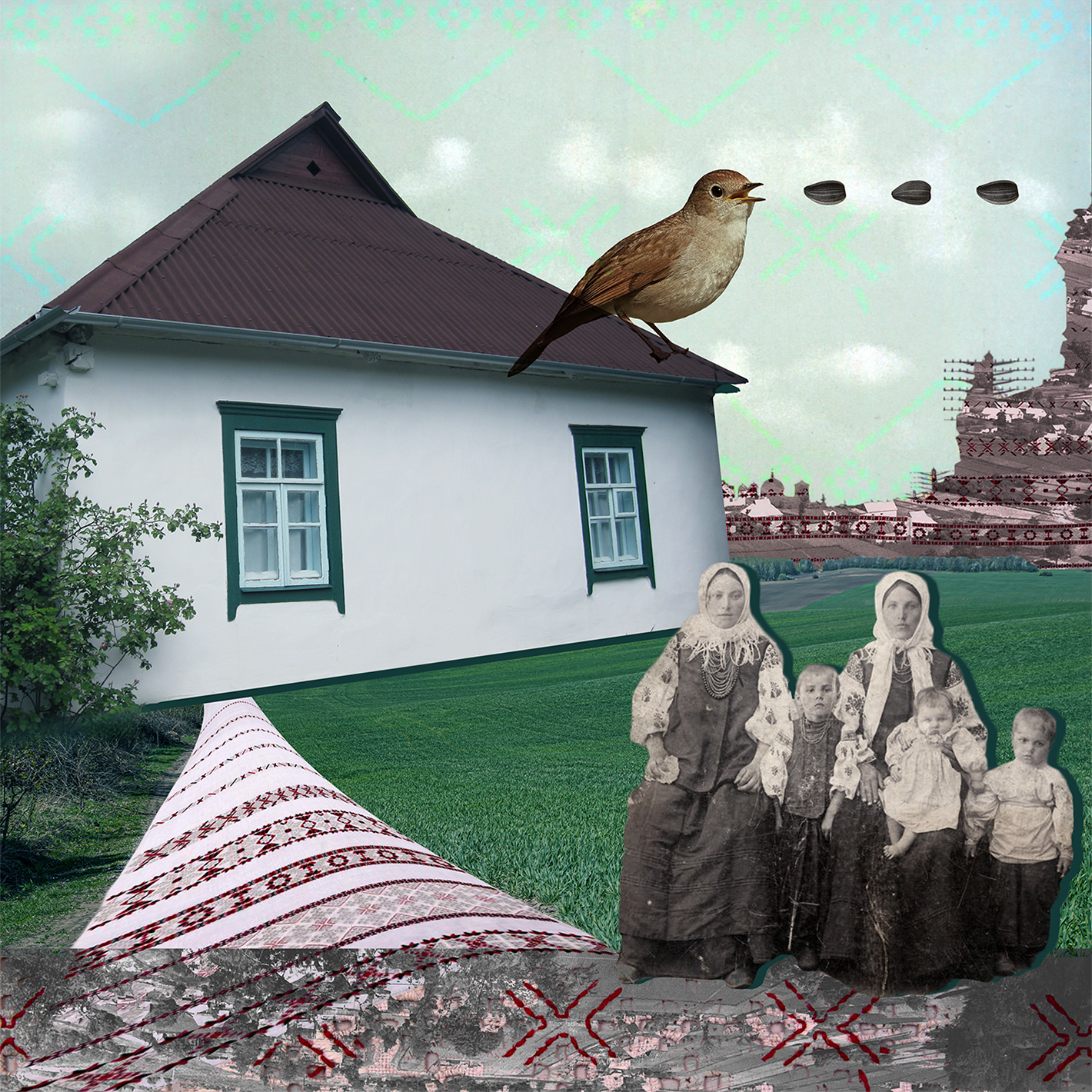
Concerts featured songs by Hryhorii Verovka, Klymentii Dominchen, Arkadii Filipenko, Ihor Shamo, and others. The work of Platon Maiboroda who composed the music for ‘Pisnia pro rushnyk’ [‘Song about the Rushnyk’]2 and ‘Kyivskyi Vals’ [‘Kyiv Waltz’] by Andrii Malyshko, was a true breakthrough. In the post-war period, ensembles like the Merited Bandurist Chapel (led by Oleksandr Minkivskyi), Dumka Academic Chapel (led by Oleksandr Soroka), and the Transcarpathian Folk Choir (led by Petro Myloslavskyi) were particularly active. From the mid-1950s, concert life became much more vibrant, with an increase intouring activities. In 1958, the Philadelphia Symphony Orchestra and a group of distinguished soloists from the USA visited Ukraine for the first time.
1. Estrada (from the French estrade, ‘platform’ is a term of Soviet phraseology in art studies, which, along with the term ‘amateur art’, was used to refer to official show business. It had a clear ideological character and a monopolistic way of organisation in a closed society.
2. Rushnykis a decorative and ritual cloth. Made of linen or cotton it usually represents woven or embroidered designs, symbols and cryptograms of the ancient world.

Kyiv, 6-A Pyrohova St